Call us: 01423 369730

Email us: sales@johnchamberswildflowers.co.uk

Home / Products / Wildflower Plug Plants / Wildflowers for Bees Plug Plants Mix

Wildflowers for Bees Plug Plants Mix

Nectar-rich wildflower plug plants designed to support bees. Ideal for field margins, parks, gardens, and biodiversity projects.

The Wildflowers for Bees Plug Plants Mix has been specifically designed to provide high-value nectar and pollen sources for bumblebees, solitary bees, and honeybees throughout the flowering season. Featuring a diverse range of UK native wildflowers, this mix supports pollinator populations while enhancing landscape biodiversity and visual appeal.

Supplied as 40cc plug plants, the mix establishes quickly, delivering immediate ecological benefit and long-term resilience. Ideal for farmers, ecologists, councils, landowners, and landscape professionals, it is well suited to field margins, parks, gardens, BNG schemes, and conservation projects.

  • Site Preparation: Remove existing vegetation and weeds. Lightly cultivate the soil to ensure good root penetration and plug establishment.
  • Planting Time: Best planted in spring or early autumn when soil moisture is reliable.
  • Planting Density: Plant plugs 20–30cm apart for a continuous nectar-rich display.
  • Watering: Water well after planting; additional watering may be required during dry periods in the first season.
  • Maintenance: Cut back after flowering and remove arisings to encourage regrowth and natural reseeding. Avoid fertilisers.

Colours

Height 40–100cm depending on species
Usage Pollinator habitats, field margins, gardens, parks, BNG schemes
Establishment Method 40cc plug plants for fast rooting and strong growth
Flowering Period Late spring to early autumn

Core species, colours and flowering period

A minimum of 10 species will be chosen from the following list, and used in equal quantities:

Agrimonia eupatoria Common Agrimony
Campanula glomerata Clustered Bellflower
Campanula rotundifolia  Harebell
Centaurea cyanus Cornflower
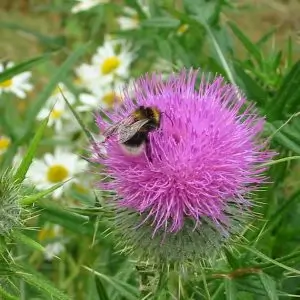
Centaurea nigra Common Knapweed
Centaurea scabiosa  Greater Knapweed
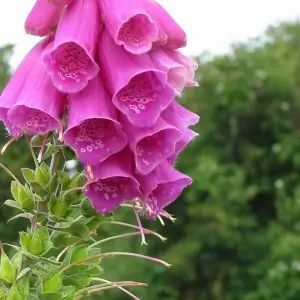
Digitalis purpurea Wild Foxglove
Echium vulgare Viper’s Bugloss
Geranium pratense Meadow Cranesbill
Hypericum perforatum Common St. John’s Wort
Hyssopus officinalis Hyssop
Knautia arvensis Field Scabious
Lotus corniculatus Birdsfoot Trefoil
Origanum vulgare Wild Marjoram
Primula vulgaris Wild Primrose
Prunella vulgaris Self Heal
Serratula tinctoria Sawwort
Stachys officinalis Betony
Thymus polytrichus Wild Thyme
Trifolium pratense Wild Red Clover
Trifolium repens Wild White Clover
Vicia cracca Tufted Vetch
Location overview Suitable for open landscapes, gardens, parks, farmland margins, and ecological enhancement areas.
Shade tolerance Prefers full sun to light partial shade for optimal nectar production.
Soil type Adaptable to most soil types including loam, sandy, and light clay soils.
Soil fertility Low to moderate fertility preferred; excessive nutrients may reduce flowering.
Moisture Moderate moisture levels; tolerates short dry periods once established.

What we do

Related Products

Grass Seed Mix Calculator

Total Required: 0 grams

*The figures provided by the calculator are a guide only, we advise contacting one of our specification team to discuss your project requirements in full.

Wildflower Seed Calculator

Total Required: 0 grams

*The figures provided by the calculator are a guide only, we advise contacting one of our specification team to discuss your project requirements in full.

Wildflower Seed Calculator

Total Required: 0 grams

*The figures provided by the calculator are a guide only, we advise contacting one of our specification team to discuss your project requirements in full.