
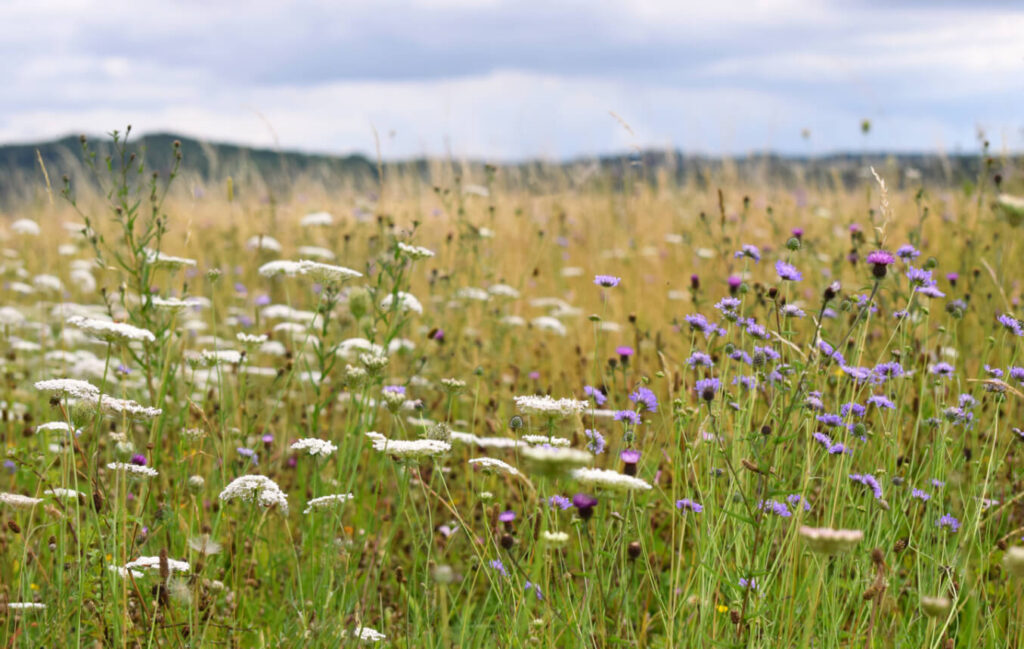
Brownfield sites, often compacted, nutrient‑poor and sparsely vegetated, can be challenging places to restore, yet they hold huge potential for biodiversity. With the right approach, these underused areas can be transformed into colourful, species‑rich habitats that improve both ecological value and visual appeal. Wildflowers are an increasingly popular choice for this kind of restoration because they are cost‑effective, adaptable and capable of thriving in low‑fertility conditions typical of brownfield land. This guide outlines how to assess, prepare and establish wildflowers on brownfield sites, and shares management advice and examples of successful projects
The Value of Wildflowers on Brownfield Sites
Supporting Biodiversity
Brownfield land is often dominated by bare ground or weedy vegetation, offering little value for wildlife. Introducing wildflowers quickly boosts habitat diversity by providing nectar and pollen for pollinators, as well as shelter and foraging for birds, small mammals and soil invertebrates. Even small, well‑designed patches can act as stepping stones between larger green spaces, creating important ecological links in urban areas.
Meeting Regulatory and Planning Goals
Wildflower creation is an effective way for brownfield projects to meet biodiversity obligations. It supports Biodiversity Net Gain (BNG) requirements, aligns with local planning policies and can contribute to wider conservation or stewardship schemes. Because wildflower habitats deliver clear, measurable ecological uplift, they help developers and landowners meet regulatory expectations while improving environmental reputation.
Economic and Social Advantages
Transforming neglected land with wildflowers can significantly improve a site’s appearance and reduce long‑term maintenance costs compared with regularly mown grass. These spaces often become valued community assets, offering opportunities for education, engagement and improved public perception of regeneration efforts. This blend of ecological and social benefits makes wildflowers a strong choice for urban and peri‑urban brownfield sites.
Assessing Brownfield Sites for Wildflower Establishment
Brownfield soils are often compacted, low in nutrients or affected by past contamination. Basic soil tests help identify pH, fertility and any risks that need treatment. Where soils are extremely poor, light remediation or adding a thin layer of low‑fertility topsoil can improve conditions and guide suitable species choices. Aggressive, weedy species such as nettle, thistle and bramble are common on brownfield sites. A quick vegetation survey helps determine what weed control is needed so these species don’t outcompete newly sown wildflowers.
Most brownfield sites are open and sunny, which suits wildflowers, but issues like drought, waterlogging or poor access can influence species selection and management. Ensuring machinery can reach the site for preparation and ongoing maintenance is an important early check.
Preparing Brownfield Sites for Wildflowers
Clearing existing vegetation is essential before sowing wildflowers. This can be done through mowing, rotavating or hand‑clearing, and in some cases carefully targeted herbicide treatments are needed to deal with invasive or persistent species. Using a stale seedbed, allowing weeds to germinate and then removing them, helps reduce competition and gives new seedlings a much better start.
Soil preparation on brownfield sites focuses on creating low‑fertility conditions. This may involve removing nutrient‑rich topsoil, lightly cultivating or scarifying the surface to create a fine, firm seedbed, and avoiding any fertiliser inputs. Well‑prepared soil supports good germination and helps maintain long‑term plant diversity.
Selecting the Right Wildflower Mix
Annual mixes provide quick colour and short‑term cover, making them useful for early visual impact or temporary BNG gains. Perennial mixes offer lasting biodiversity, lower maintenance and are generally the best choice for long‑term meadows. Many projects combine the two; annuals brighten the first year while perennials establish gradually. Species choice should match the site’s soil, moisture and exposure.
Sowing and Planting Techniques
Autumn sowing suits species that need winter cold, while spring sowing works well on dry or exposed sites. Broadcast sowing is cost‑effective for large areas, drill sowing offers more precision, and plug planting is ideal for smaller or high‑visibility spaces. After sowing, the seed should stay on the surface and be lightly pressed in to ensure good soil contact.
Establishing Wildflowers on Brownfield Sites
Early management is crucial. Regular checks help spot weed outbreaks or damage, and aggressive species should be controlled before they overshadow young seedlings. The first main cut usually takes place in late summer of year one, with all cuttings removed to prevent nutrient build‑up. In following years, one or two cuts help maintain balance. Ongoing monitoring allows for small adjustments such as overseeding or altering cut frequency to keep the meadow diverse and healthy.
Transforming brownfield land with wildflowers brings long‑lasting ecological and social benefits. These habitats support a greater variety of pollinators, birds and small mammals, while helping create wildlife corridors that link fragmented urban and rural spaces. Wildflower meadows also improve soil stability, reduce erosion and support better water infiltration, contributing to a healthier local environment. As low‑maintenance green spaces, they offer attractive settings for communities and can provide opportunities for education, wildlife walks and citizen‑science activities, helping strengthen local engagement.
Overall, wildflower restoration is a practical, cost‑effective way to turn degraded brownfield sites into vibrant, species‑rich landscapes. With good assessment, thoughtful preparation and ongoing management, even poor‑quality land can deliver meaningful biodiversity gains and long‑term ecological value.
FAQs – Wildflowers on Brownfield Sites
Can wildflowers grow on poor-quality brownfield soils?
Yes, but soil preparation and selection of hardy species are essential for success.
Should topsoil always be removed?
Not always, but stripping highly fertile or contaminated soil often improves establishment.
Which wildflower mix is best for brownfield sites?
A combination of annuals for early colour and perennials for long-term biodiversity is often most effective.
How often should brownfield wildflower meadows be cut?
Typically once annually in late summer, with arisings removed; early cuts may be required in high-weed sites.
Can wildflowers contribute to Biodiversity Net Gain?
Yes, well-managed wildflower brownfield habitats can deliver measurable BNG outcomes.


